The EMA swing trading strategy: 8, 21, 50 and 200
The strategy uses four exponential moving averages: the 50 against the 200 decides the trend, and the 8 and 21 show when a pullback inside that trend has finished. A long only qualifies when the 50 EMA is above the 200; the entry comes on the first close back above the short EMAs after a pullback, with the stop beyond the pullback’s low. EMAs, not simple moving averages, because they react to recent price faster.
What each EMA does
The 200 EMA is the long view. Price above a rising 200 is an uptrend worth buying dips in; below a falling one, longs are fighting the tide. The 50 EMA against the 200 is the confirmation: 50 over 200 is the structure the Desk calls a confirmed trend, and the trend gate fails without it. The 21 EMA is where healthy pullbacks tend to pause. The 8 EMA is the trigger line: the first daily close back above it after a pullback says buyers have returned.
The entry, worked on a real chart
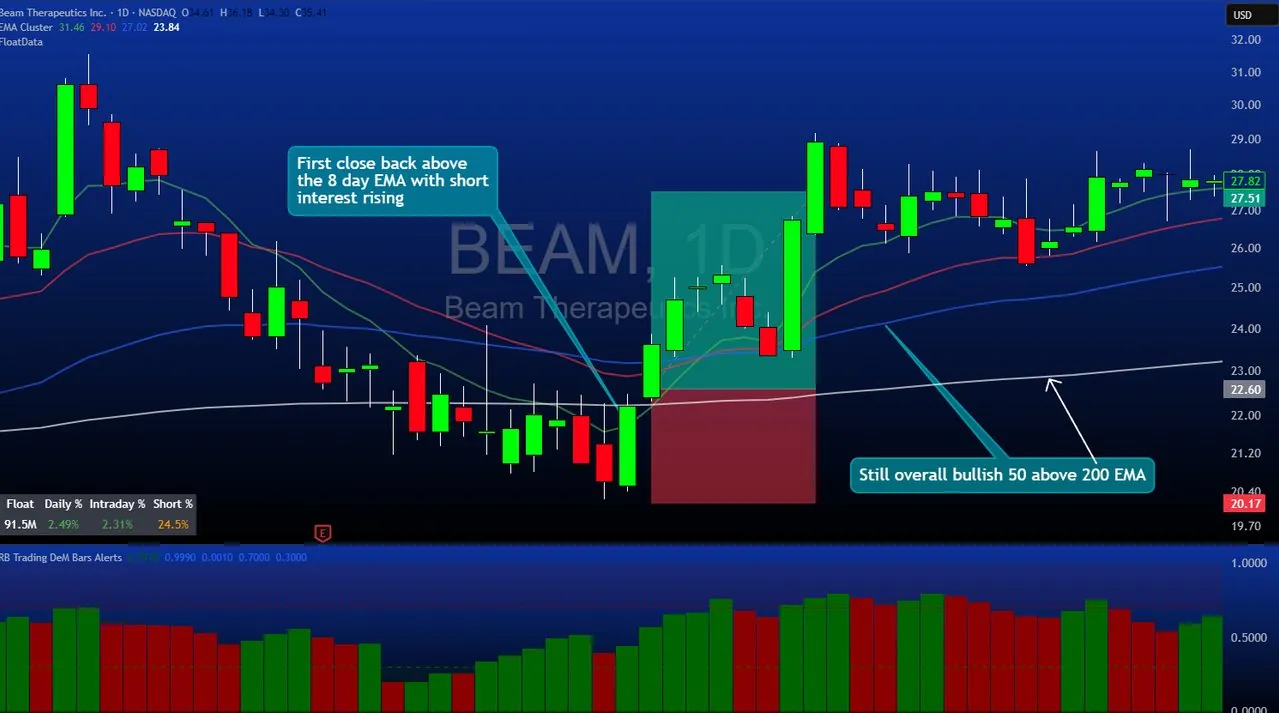
The BEAM squeeze long from November 2025 shows the sequence. The 50 EMA was above the 200, so the trend gate passed. Price pulled back under the short EMAs, then printed its first close back above the 8 EMA with short interest rising. The entry was 22.60, the stop 20.17 under the pullback low, and the target 27.51 was hit on 4 December for +2.02R.
The rule that keeps you out
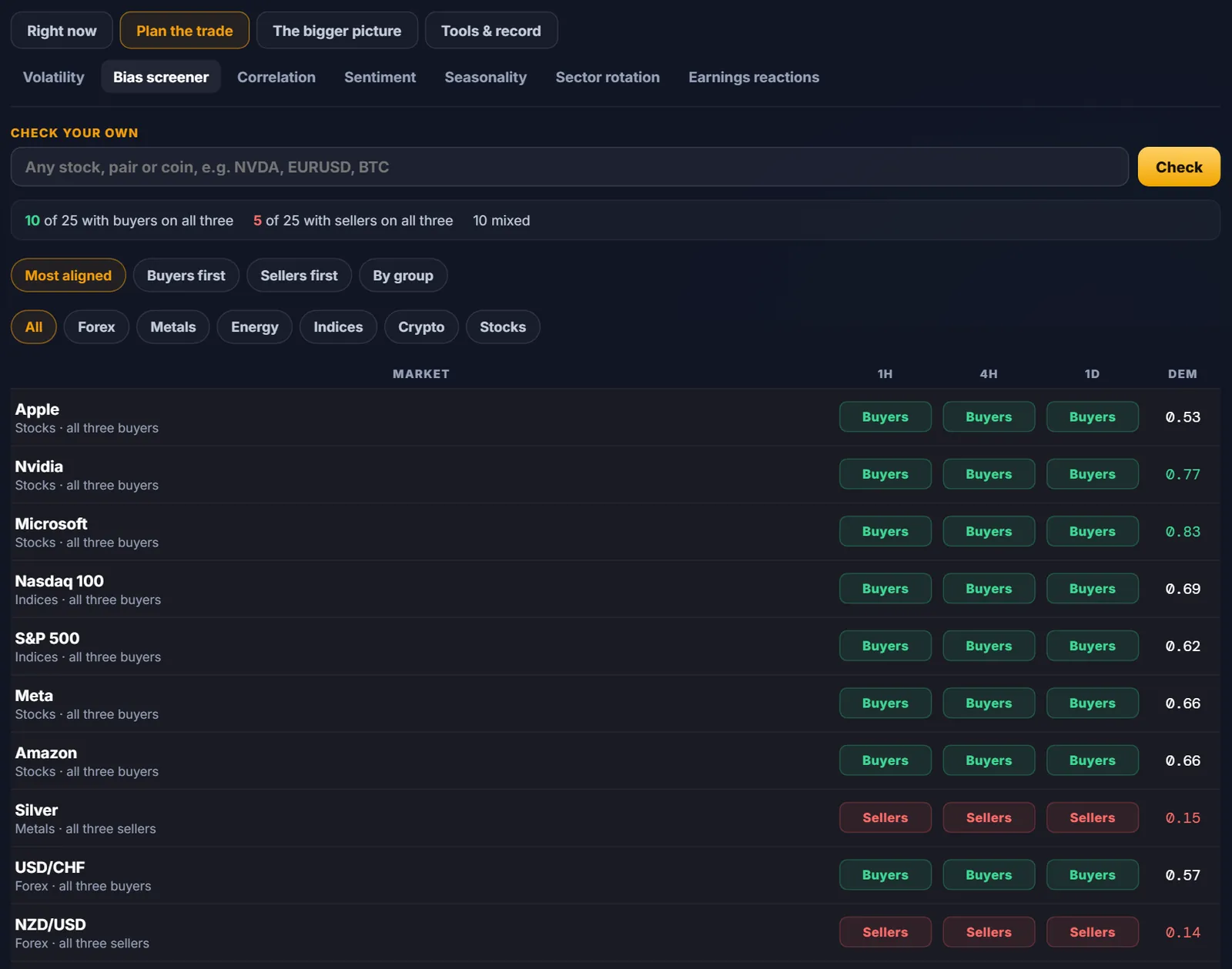
The strategy's best feature is the trades it refuses. When the 50 is below the 200, a bounce to the 8 EMA is not a buy signal however oversold the market looks; it is a falling market pausing. The same stack works for shorts in reverse, which is how the forex side takes sells. Running the 1H, 4H and daily charts through the same test shows whether the timeframes agree; when they do not, the trade waits.
Where it fails
EMAs lag by design, so in a sideways market the 50 and 200 cross back and forth and the trend gate opens and shuts on noise. That is when the second and third gates earn their place: momentum (the DeMarker under 0.30 on a long) and risk (a stop with a sensible ATR distance and at least as much reward as risk). The strategy is a filter, not a forecast. The losers it produces are in the record with the winners.
This week’s setups are already mapped
Every Sunday before the open: analysed swing setups across stocks, forex, gold and crypto with the exact entry, stop and target, an alert when one triggers, the live dashboard and the paid Substack letters.
Get this week’s setups →111 trades · 54 losers shown · +54.5R see the full record →
FAQ
Why EMAs and not simple moving averages?
An exponential moving average weights recent prices more, so it turns sooner when the trend turns. The Desk uses the 8, 21, 50 and 200 EMAs throughout and never SMAs.
What timeframe is the EMA strategy for?
The daily chart for swing trades, with the 1H and 4H as a check that the shorter timeframes agree. The 200-week EMA is used separately for long-term accumulation.
Is the 50 crossing the 200 a buy signal on its own?
No. It confirms the trend and opens the gate. The entry still needs a pullback, a close back above the 8 EMA and a stop with a defined risk.
Does the strategy work for forex?
Yes, the same stack is used on the forex and metals levels, for buys and sells. Gold and currency pairs need stops sized to their own daily range.