How to build a weekly trade watchlist from scratch
A watchlist is not a list of stocks you like, it is a list of levels you have pre-committed to act at. The manual build: fix a universe, screen it for intact structure, scrub the earnings calendar, mark one level per surviving chart, and write the trigger that would convert each into a trade. Done properly it takes two to four hours a week; this page is the uncompressed version of what a research desk sells in twenty minutes.
Steps one to three: shrink the world
Universe. Start bounded: S&P 500 names plus the major forex pairs and one or two crypto majors. Liquidity is non-negotiable, if the spread is wide enough to feel, the stop you plan is fiction. A fixed universe also makes week-over-week comparison meaningful; a rotating one teaches you nothing.
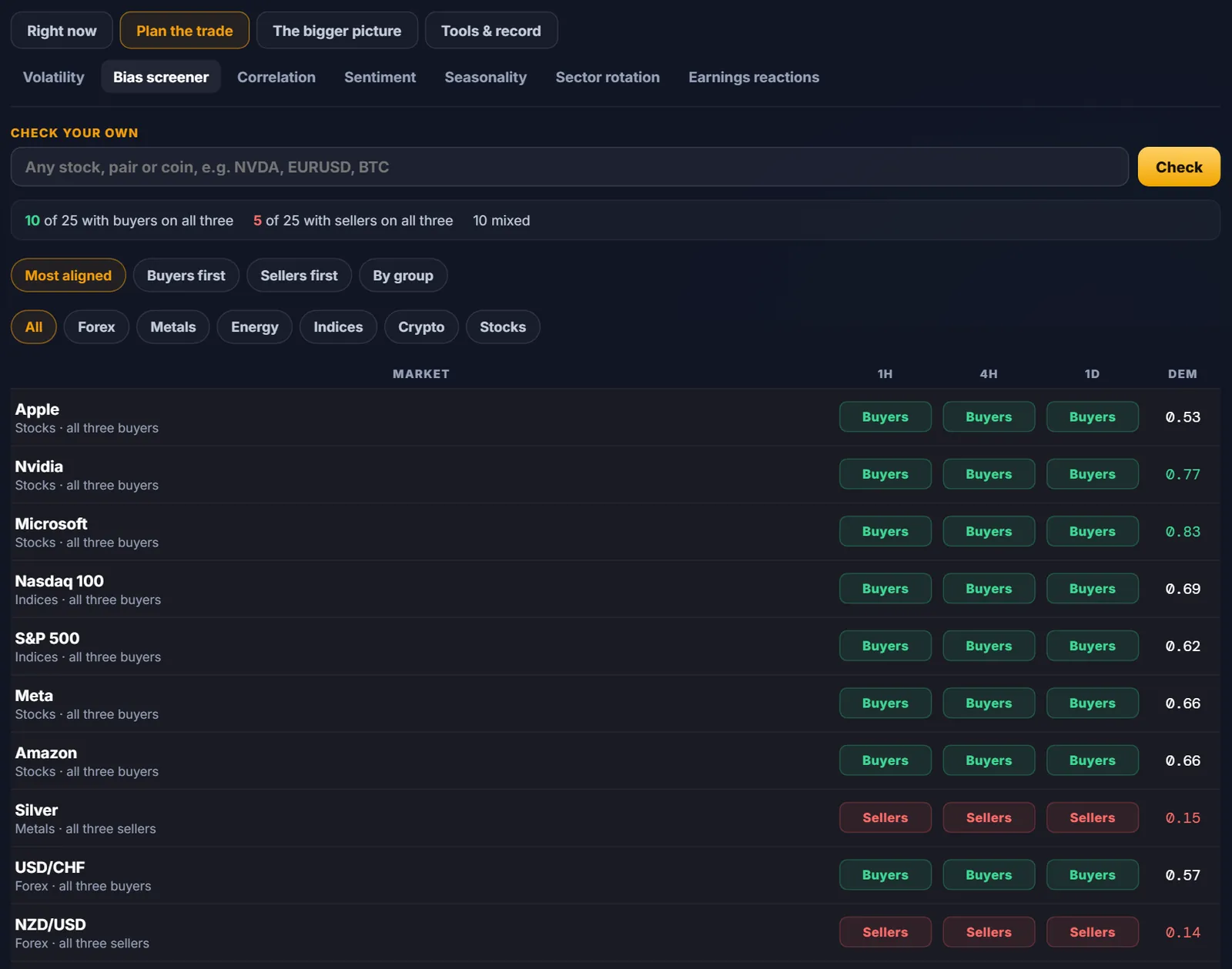
Structure screen. Keep only charts where the long trend is intact, 50-week average above the 200-week is a serviceable one-line test, and where price is doing something: approaching a level, basing after a pullback, reclaiming an average. A strong chart mid-range with nothing to act on is a fine company and a useless watchlist entry.
Earnings scrub. Any stock reporting within your holding horizon either leaves the list or gets flagged for reduced size, the gap logic in one step. This single habit removes the most common blow-up in swing books.
Steps four and five: from charts to commitments
One level per chart. The breakout price, the pullback zone, or the higher-timeframe value area, written as a number, not a vibe. If two levels compete, the chart is not ready. Ten to fifteen finished names is a full week; beyond that you are collecting, not preparing.
Define the trigger. "Break above", "daily close above", or "pullback tag", each is a different bet with a different stop. Write the if-then line including stop and target so the weekend version of you has already made the decision the weekday version only executes. This output feeds directly into the Sunday routine.
The honest accounting, and the shortcut, priced
Time: two to four hours weekly done alone, and the first months are slower while the screens and templates get built. Skill: the level-marking step is genuinely learned, not followed, expect your early lists to embarrass you in review, which is the mechanism by which they improve.
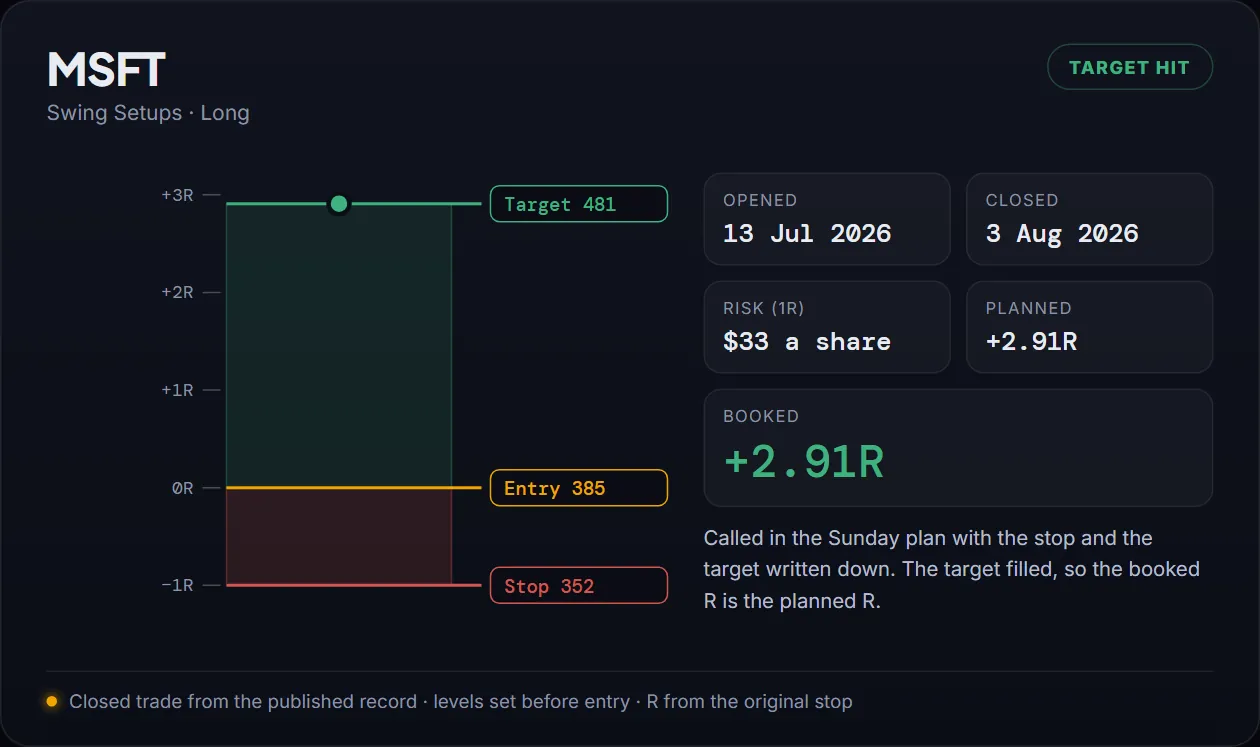
The shortcut is subscribing to someone who does the scan, and the same test applies to every provider including this one: never follow a list whose author does not publish outcomes. A watchlist is checkable only if its calls are dated, its losers stay visible, and its results are stated in R. That is what the published record exists for; hold anyone selling you a watchlist to the identical standard, and keep scoring your own trades in R either way.
This week’s setups are already mapped
Every Sunday before the open: analysed swing setups across stocks, forex and crypto with the exact entry, stop and target, plus the live dashboard, three letters a week, the TradingView indicator suite and the masterclass library.
Get this week’s setups →111 trades · 54 losers shown · +54.5R see the full record →
FAQ
How many stocks should a watchlist have?
Ten to fifteen finished entries with levels and triggers beats fifty tickers with none. The constraint is your capacity to genuinely know each level, past that number you are decorating a spreadsheet.
Which free screeners work for this?
Any screener that filters by market cap, average volume and price-versus-moving-average covers steps one and two, the big finance portals and most broker platforms include one. The irreplaceable manual work is the level marking, which no screener does.
How long until my own lists are any good?
Expect a few months of iteration. The fast lane is reviewing outcomes weekly: which levels held, which triggers were traps, what you would mark differently. The list improves exactly as fast as the review is honest.
Should I just copy someone else’s watchlist?
Only with verification: dated calls published in advance, losers left visible, results in R-multiples. Anything else is marketing. And even a verified list should be sized and stopped by your rules, copying entries without copying risk discipline copies nothing.