Swing trading a prop firm challenge: the rules, the risk budget, and what you may copy
Swing trading a challenge comes down to three checks: whether the firm lets you hold over weekends and news, whether your risk per trade survives a realistic losing streak inside the daily and overall loss limits, and whether the firm allows trades taken from someone else’s ideas. FunderPro and Fintokei both restrict copying signal providers, so read their rules, quoted below, before you place any service’s setups, including mine, on a challenge account.
Holding over the weekend and through news
A swing trade is held for days, often across a weekend, so the weekend rule decides whether the method fits the account at all. The two firms I rate most handle it differently. At FunderPro, its help centre says weekend holding is allowed only on accounts with the Swing Add-On; without it, trades must be closed by Friday 16:30 New York time. News trading is permitted in challenges, and on funded accounts only with the Swing Add-On. At Fintokei, the help centre says positions can be kept open as long as you wish, including over the weekend, and trades can be opened before, during or after news, with a warning that a gap can still breach a limit.
Both checked on 8 Oct 2026. Rules change, so open the firm's own page before you buy a challenge. The Journal keeps the full rule sets on its FunderPro rules and Fintokei rules pages.
A risk budget built on a real losing streak
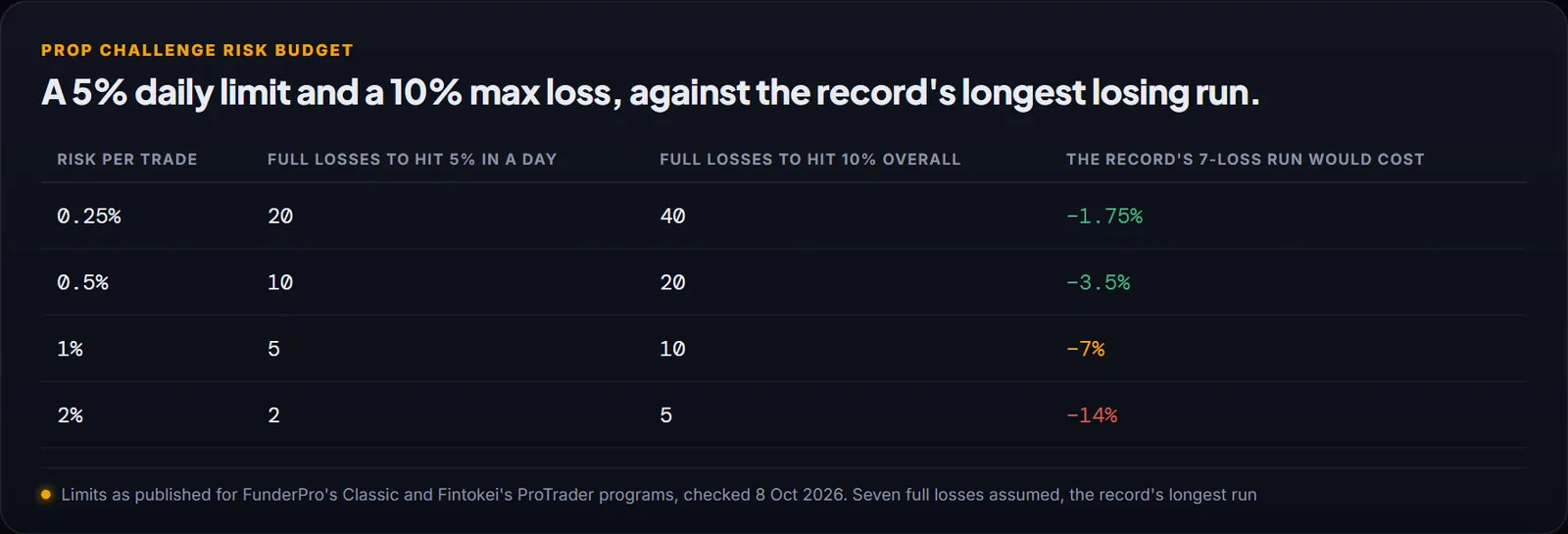
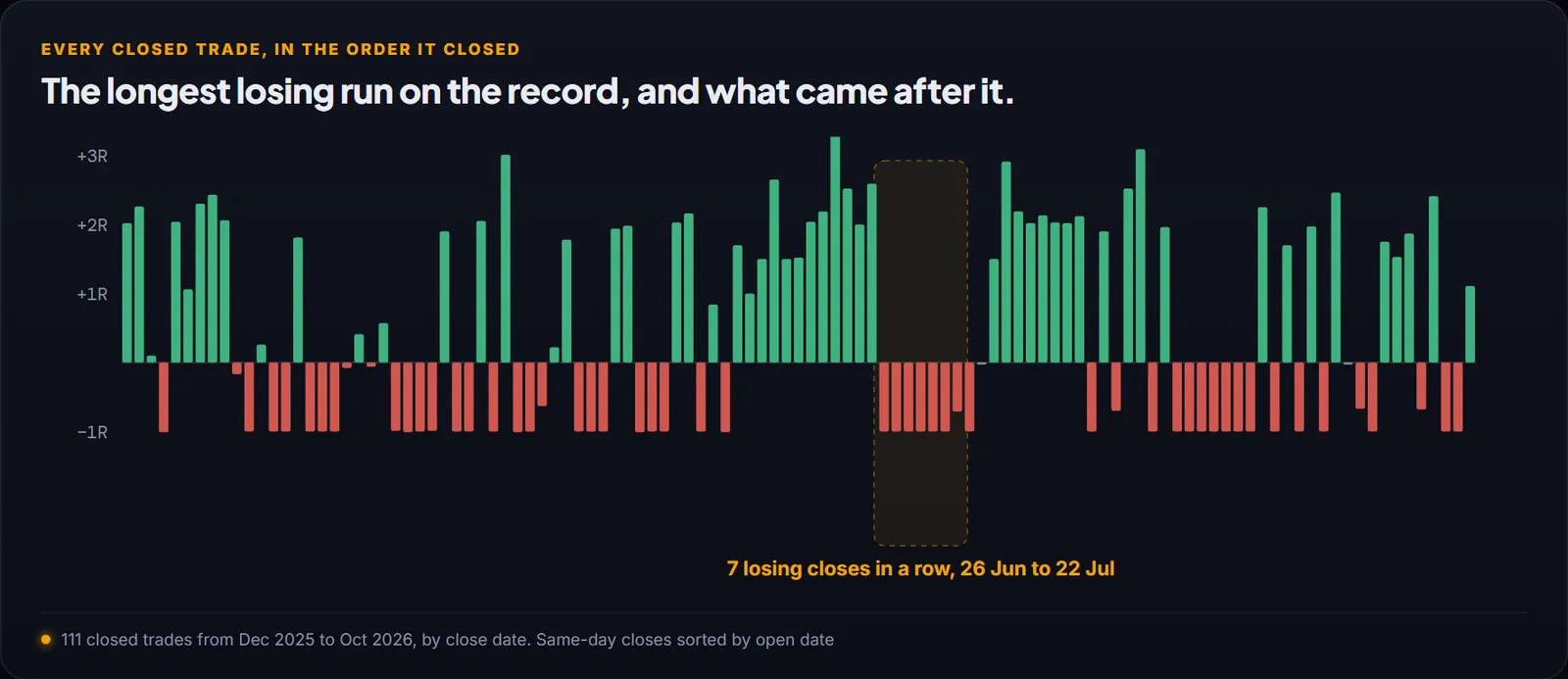
FunderPro's Classic challenge and Fintokei's ProTrader both set a 5% daily loss limit and a 10% maximum loss. The question is how many full losses in a row your risk per trade allows before one of those lines is hit. The longest losing run on my published record is seven closes in a row, so the table works it through against that.
Can you trade someone else’s setups on a challenge?
This is the part most services skip, so here are the firms' own words, checked on 8 Oct 2026. FunderPro’s copy trading article says copy trading is allowed "only between your own accounts" and lists "Using third-party signal services to copy external traders" as not allowed, with disqualification or termination as the penalty. Fintokei’s article prohibits copying trades from a signal provider or a Telegram or Discord channel and placing the same or similar trades as a mentor. It does allow manually executing ideas inspired by others, as long as trades are not synced in real time and you are not one of several clients holding identical trades, and it asks you to contact it in advance if you are unsure.
So my honest advice is this. Do not copy any service's levels, mine included, onto a challenge account and assume it is fine. Use a weekly plan to learn how setups are built, run your own analysis, and if you want to take a trade that matches a published idea, ask the firm in writing first and keep the reply. The method, the free Markets tools and the record are yours to learn from either way.
Sizing a challenge trade
Once the rules allow a trade, the size follows from the stop, never the other way round. The free Position size tool takes the account, the risk percentage and the levels and returns the lots, so a full stop costs exactly the planned share of the challenge.
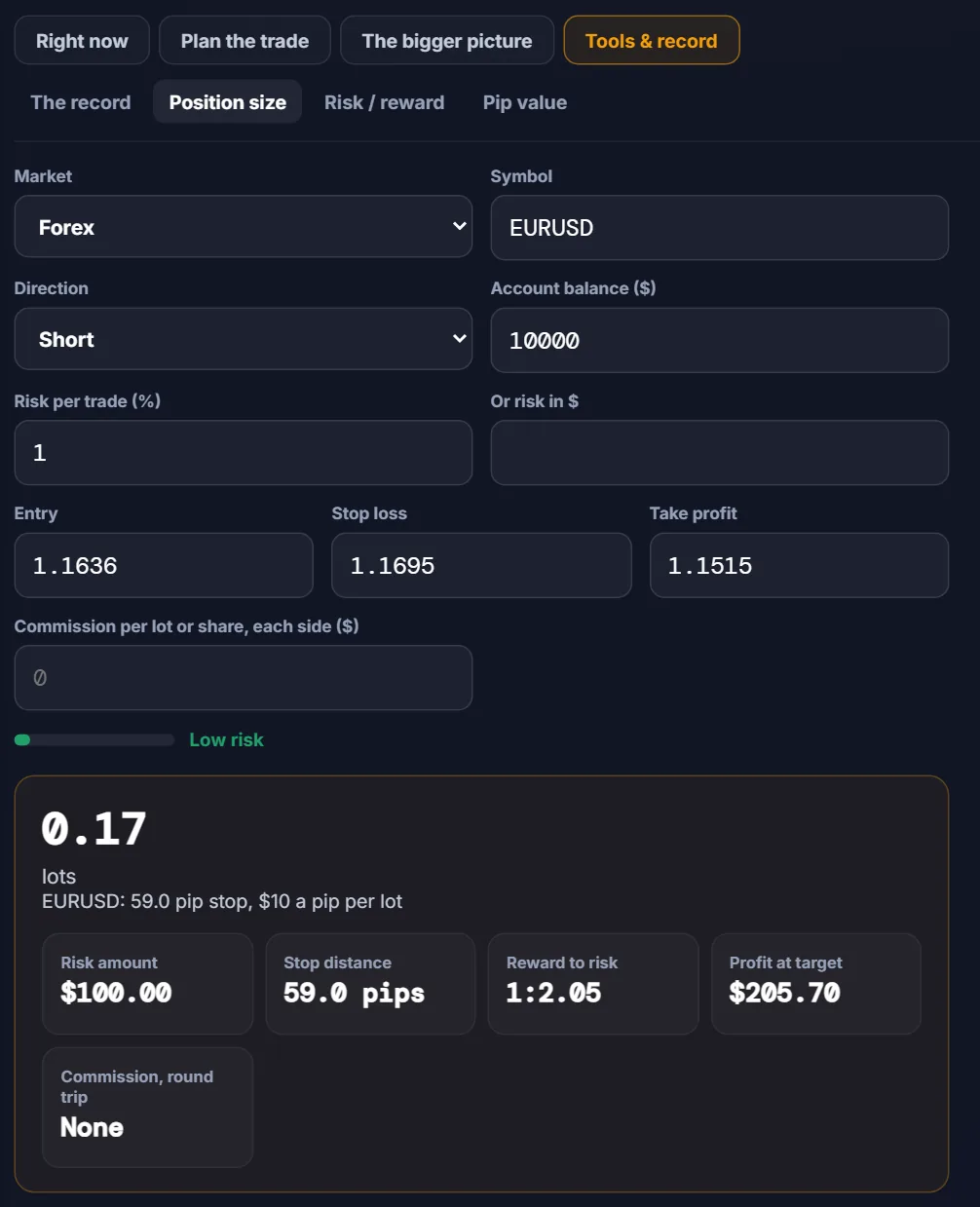
For the maths of a losing run in more depth, read swing trading losing streaks; for where the stop goes, the ATR stop guide.
Learn the method, then trade your own plan
Members get the weekly setups with the entry, stop and target, the reasoning behind each one, the masterclass and the paid Substack letters. Check your prop firm’s rules before trading any published idea on a challenge account.
Get this week’s setups →111 trades · 54 losers shown · +54.5R see the full record →
FAQ
Can I hold swing trades over the weekend on a prop firm challenge?
It depends on the firm. FunderPro allows weekend holding only with its Swing Add-On; Fintokei allows positions to stay open over the weekend. Both checked on 8 Oct 2026; confirm on the firm’s site before you buy.
Can I copy trade signals on FunderPro or Fintokei?
Both restrict it. FunderPro does not allow third-party signal services to copy external traders. Fintokei prohibits copying a signal provider or a Telegram or Discord channel, while allowing ideas inspired by others to be executed manually under conditions. Ask the firm in writing before trading any published idea.
How much should I risk per trade on a challenge?
Enough that a realistic losing run stays well inside the overall loss limit. Against a 10% maximum loss, a seven-loss run costs 7% at 1% risk and 3.5% at 0.5% risk.
Which prop firms does RB Trading use?
FunderPro and Fintokei are the two I recommend first. That is a preference, not a guarantee of anything; read each firm’s rules for yourself.