The London and New York overlap, for swing traders
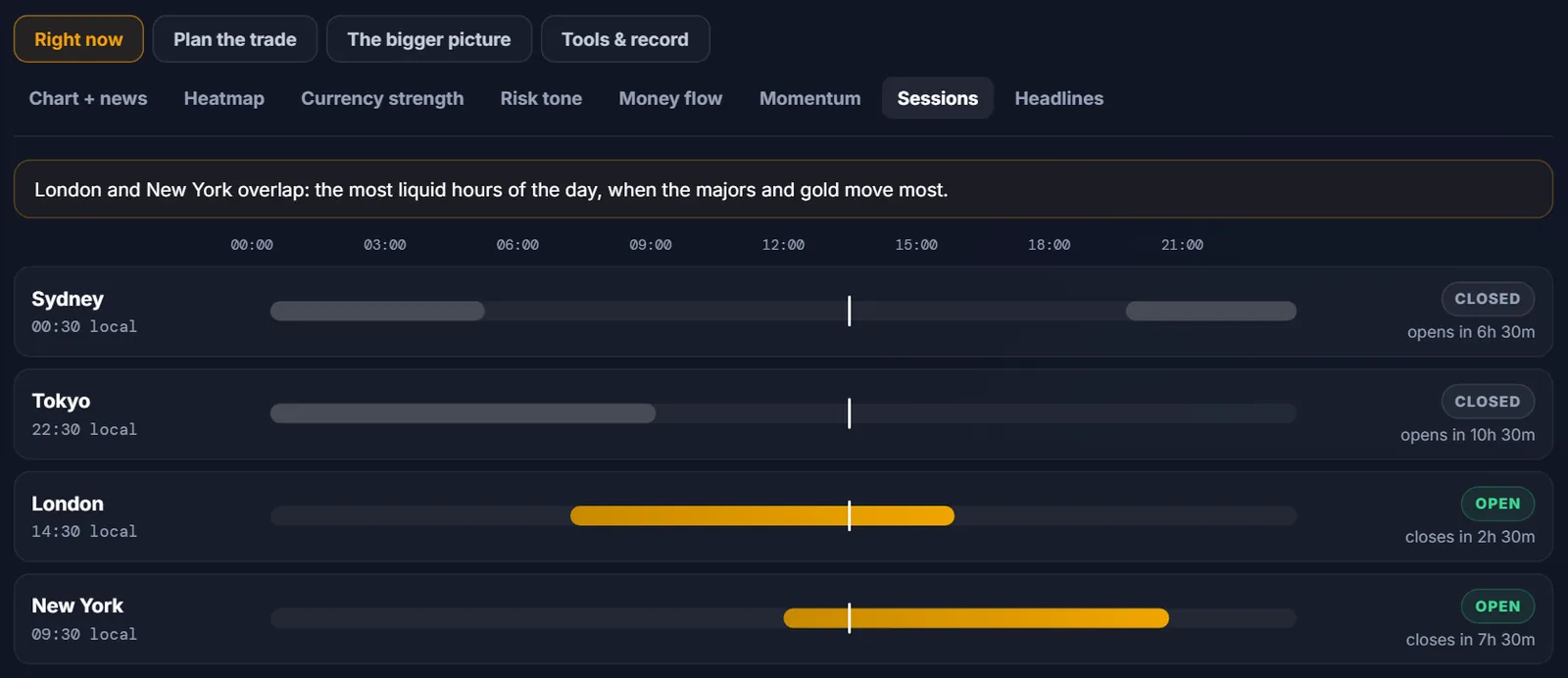
The overlap is the stretch when London and New York are both open: roughly 8am to 12pm New York time, which is 13:00 to 17:00 UTC in winter and 12:00 to 16:00 UTC in summer. It is usually the busiest and most liquid part of the forex day. For a swing trader it matters less as a time to trade and more as the time your levels are most likely to be reached, and the time US data lands.
The times, and the weeks they move
OANDA's education pages put the overlap at 8am to 12pm New York time. Because the UK and the US change their clocks on different Sundays, the UTC times shift twice a year. For most of the year it is 12:00 to 16:00 UTC (summer time on both sides) or 13:00 to 17:00 UTC (winter time on both sides). For a week or two in March and again in late October, when one country has changed and the other has not, it runs an hour off those times. The simplest fix is to read sessions in your own time zone rather than converting by hand.
Why it moves more
Two of the largest trading centres are open at once, so more orders meet and spreads on the majors tend to be at their tightest. Scheduled US data adds to it: many of the biggest US releases, such as jobs and inflation, come out at 8:30am New York time, inside the overlap, and a single print can move EUR/USD, USD/JPY and gold more in a minute than in the whole Asian session.
How a swing trader uses the overlap
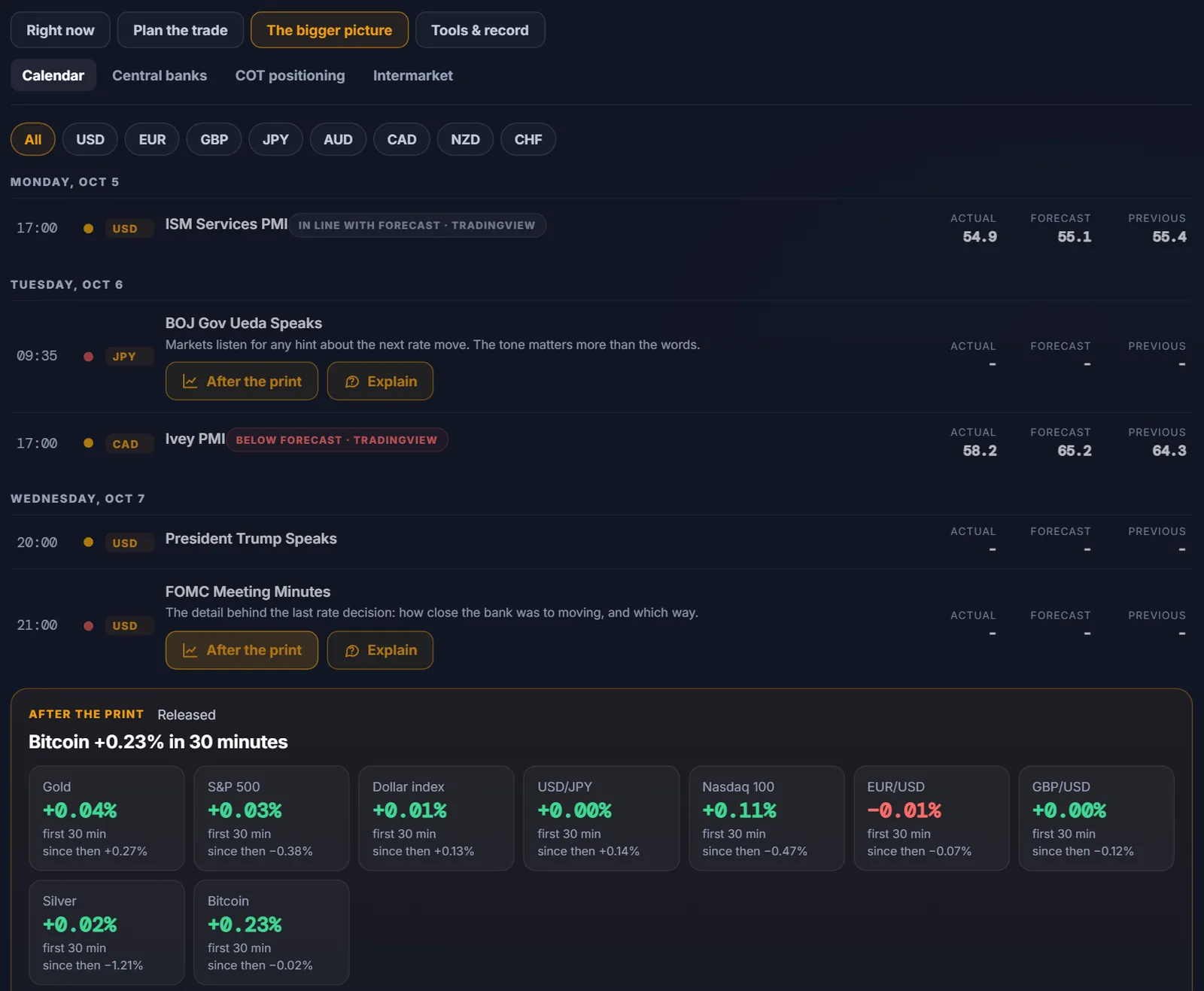
A swing trade lasts days, so you do not need to be at a screen for the overlap. What you need is to know it is coming. Three habits cover it. Expect fills there. A level written down on Sunday is most likely to be reached when the market is busiest, so the trigger alert for a forex setup often lands in the afternoon in Europe. Check the calendar against your levels. If a high-impact US release is due inside the overlap and your entry sits a few pips from price, the release may fill it on a spike; decide in advance whether that fill counts. Leave stops where they are. A stop placed beyond structure with an ATR distance is meant to survive an overlap spike; tightening it before the session is how good trades get stopped by noise.
What the overlap is not
It is not a reason to take more trades. The busiest hours are also the hours with the most reversals, and a day trader working the overlap pays the spread and the slippage on every round trip. The swing versus day trading guide counts those costs. On the Desk, the weekly forex ideas are set on Sunday and left alone through every session of the week, overlap included.
This week’s setups are already mapped
Every Sunday before the open: analysed swing setups across stocks, forex, gold and crypto with the exact entry, stop and target, an alert when one triggers, the live dashboard and the paid Substack letters.
Get this week’s setups →111 trades · 54 losers shown · +54.5R see the full record →
FAQ
What time is the London and New York overlap?
About 8am to 12pm New York time. In UTC that is 12:00 to 16:00 in summer and 13:00 to 17:00 in winter, and an hour off for the short spells when the UK and US clocks have changed on different dates.
Which pairs move most in the overlap?
The pairs with the euro, the pound or the US dollar on one side, and gold, because both centres are active and most US data is released inside the window.
Should a swing trader trade the overlap?
A swing trader does not need to watch it. Set levels in advance, check the calendar for US releases that could fill them, and let the alerts do the watching.
Is the overlap the best time to trade forex?
It is usually the most liquid time, with the tightest spreads on the majors. That helps entries, but it also brings the sharpest news moves, so it rewards a plan made beforehand.